
The modern piano is the most popular musical instrument in history. No other instrument is capable of such a wide dynamic range and long sustain, a wide tonal colour palette, and unlimited note polyphony. Smaller pianos are suitable for small spaces and intimate venues, while concert grands have the power to project into large concert halls, and play as an equal in large ensembles.
A piano gives players access to all of its expressive potential for as long as it is well maintained. Unfortunately, pianos are often treated as black boxes or as pieces of furniture that are expected to function flawlessly for decades without any servicing other than tuning. That is, until something becomes obviously wrong, and a technician is called in to ‘fix it’. The reality is that pianos have interacting moving parts that will wear with use, or be affected by unfriendly climatic conditions.
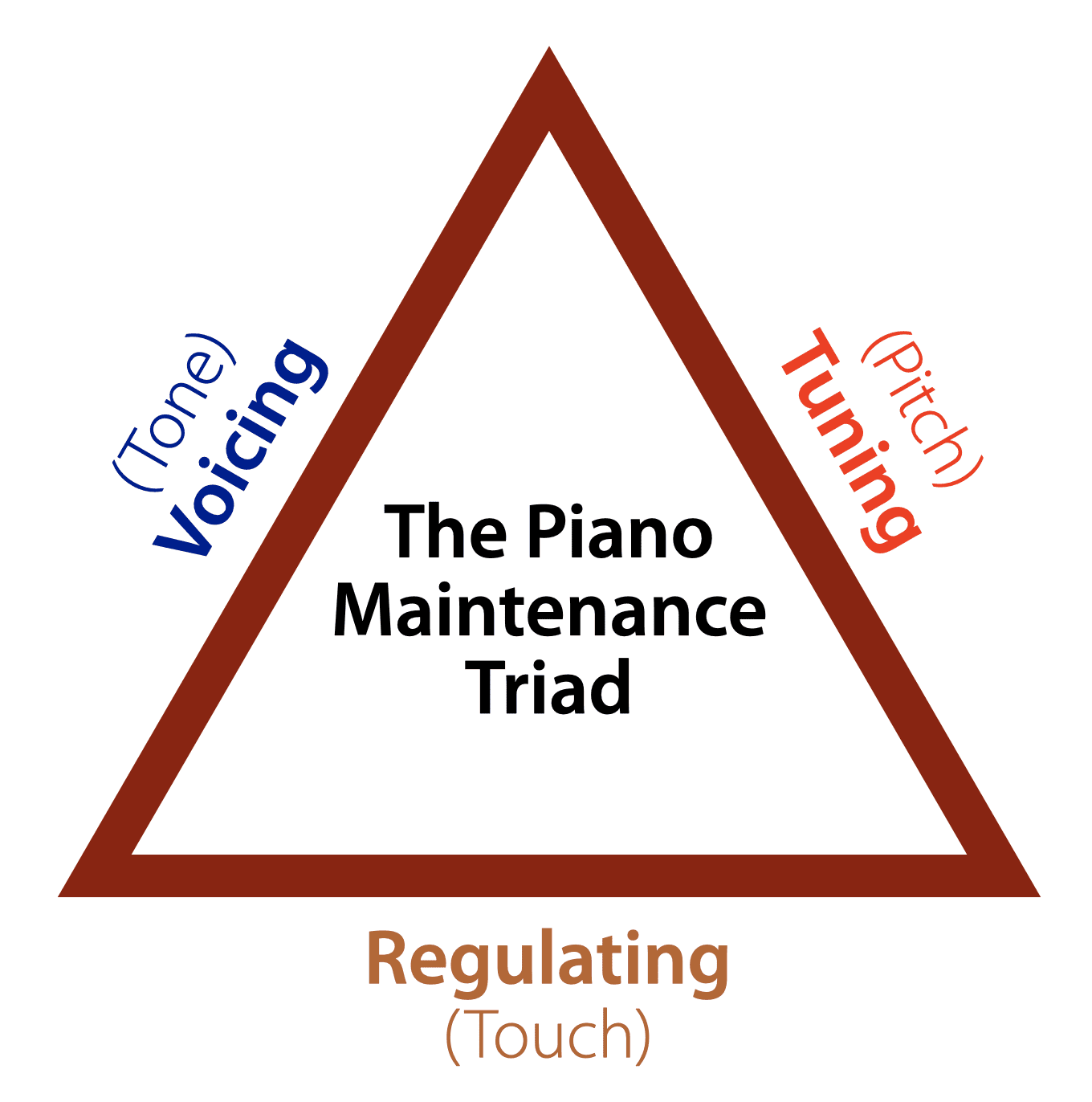
There are three aspects to complete piano maintenance:
- Tuning — which addresses pitch, or the accurate implementation of a chromatic scale across the entire keyboard. Tuning services are offered for upright and grand pianos.
- Regulation — which addresses touch, or how the piano feels under the pianist’s fingers during play. Candidate pianos are evaluated to determine if they are in suitably good condition for regulating, and if not what needs to be done to achieve that state. Options and costs are discussed with the client.
- Voicing — which addresses the tonal character of the sound produced when hammers strike the strings. Voicing is best done soon after the piano’s action has been properly regulated or is known to already been in good regulation.
Rebuilding comes into consideration when regular servicing can no longer compensate for deteriorating components. Whether or not a piano is used heavily, most of its components deteriorate simply by aging — felts and leathers lose their resilience, wood and certain glues become brittle, and metal parts corrode, fatigue, or deteriorate with time. The core components (soundboard, plate and pinblock), if largely unaffected, can be refurbished. The deteriorated parts can be replaced. A rebuilding done well using quality parts can yield results that exceed the quality of a comparable new piano.
Not every piano deserves to be rebuilt. A piano becomes a rebuilding candidate if it meets enough of the following criteria:
- Has functional and tonal potential
- Has market value after rebuilding
- Is a quality instrument
- Repairs are feasible
Most brand-name grands made after 1888 satisfy these conditions, as long as the design is fully modern. Reconditioning/rebuilding services are offered only for grand pianos. Candidate pianos are evaluated to determine the scope of work. Options and costs will be discussed with the client.